Author Name: Elizabeth Hulett
Library System: Western Maryland Regional Library
Top 3 things learned:
I attended several different sessions at the ALA Conference in June 2015 including once called No Sugarcoating Allowed: Four Honest Perspectives on Change Management. From this session I learned that there are several stages that people go through during change and one of them is grieving. Many people feel they are losing something when things change and those feelings need to be acknowledged and respected. It is also crucial to keep people well informed during the change process so they feel included and feel that their opinions are being heard. Also, expect problems and setbacks and be prepared for them. Those managing the change should also not take everything on themselves. Delegation of tasks will not only lead to buy-in from the staff, but will also relieve some
of the stress brought on by the changes.
How to implement:
If a major change were to take place in my organization I would make sure to keep all staff informed about the reason for the change, what the steps are going to be to achieve the change and what is the
envisioned result.
Showing posts with label LSTA Grant 2015. Show all posts
Showing posts with label LSTA Grant 2015. Show all posts
Thursday, July 16, 2015

Monday, July 6, 2015
ContentDM Users Group 2015 @ Goucher College
Author Name: Tracy Carroll
Library System: Western Maryland Regional Library
Learning Event website: http://www.digitalmaryland.org/ContentdmConference/
Top 3 things learned:
1. How to input data into ContentDM using a Google Worksheet
2. How to add funnels into reporting for Google Anayltics
3. When importing data from old WHILBR into Digital Whilbr, how to add extra
fields in ContentDM to keep track of the old record IDs.
4. How to add longitude an latitude to ContentDM and use it to plot data on a
Google Map
How to implement:
1. While we don't have to use Google Worksheets, we can use Excel to do the
same thing simply by adding a few javascript files.
2. By adding funnels in Google Analytics we can build reports for a specific
collection to see clearly the activity it is generating.
3. By adding an additional field on the collection table in ContentDM, we can
programmatically point users to the new record on the ContentDM website.
4. By adding an additional field on the collection table in ContentDM we can
programmatically plot locations using Google maps.
Additional learning: I also learned about some additional open source
resources that will allow us make the front page look nicer. Also, we went
through some of the XML coding and learning how to edit TMX files.
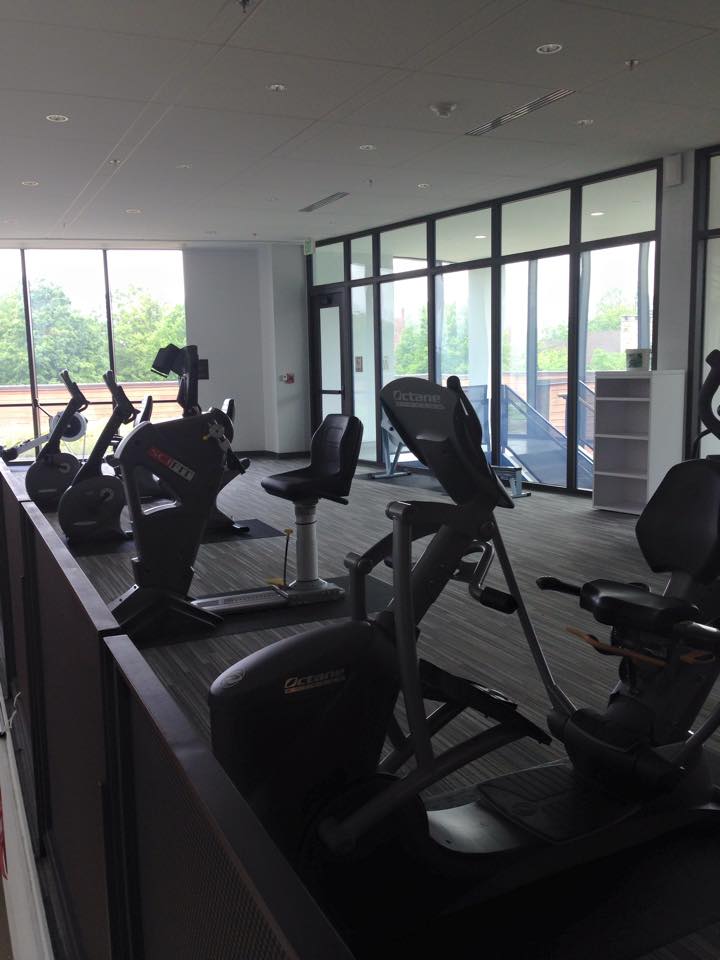
http://www.wmrl.info/sites/default/files/webform/Goucher_Workout.jpg
Library System: Western Maryland Regional Library
Learning Event website: http://www.digitalmaryland.org/ContentdmConference/
Top 3 things learned:
1. How to input data into ContentDM using a Google Worksheet
2. How to add funnels into reporting for Google Anayltics
3. When importing data from old WHILBR into Digital Whilbr, how to add extra
fields in ContentDM to keep track of the old record IDs.
4. How to add longitude an latitude to ContentDM and use it to plot data on a
Google Map
How to implement:
1. While we don't have to use Google Worksheets, we can use Excel to do the
same thing simply by adding a few javascript files.
2. By adding funnels in Google Analytics we can build reports for a specific
collection to see clearly the activity it is generating.
3. By adding an additional field on the collection table in ContentDM, we can
programmatically point users to the new record on the ContentDM website.
4. By adding an additional field on the collection table in ContentDM we can
programmatically plot locations using Google maps.
Additional learning: I also learned about some additional open source
resources that will allow us make the front page look nicer. Also, we went
through some of the XML coding and learning how to edit TMX files.
http://www.wmrl.info/sites/default/files/webform/Goucher_Workout.jpg
Wednesday, June 10, 2015
DrupalCon 2015 - Los Angeles
 |
| DrupalCon 2015 |
May 11-15, 2015
DrupalCon is a global conference where thousands of Drupal developers, system engineers, designers, project managers, functional analysts, documentation specialists, media, and business people gather to participate in learning sessions, talks, code sprints, and social events. There were people from over 50 countries represented this year!
 |
| The customary Drupal photo of the attendees. |
There were several workshops and sessions available but these were a few of my top picks:
- Defense in Depth: Lessons learned securing 100,000 Drupal Sites -
with With Cellar Door, Nstielau and Geetarluke (Drupal users names)
It was a timely message as recently I had one of my sites hacked so these were key things that I learned to do:
- Have the CIA security triad in place - Confidentiality , Integrity, Availability (confidentiality is a set of rules that limits access to information, integrity is the assurance that the information is trustworthy and accurate, and availability is a guarantee of reliable access to the information by authorized people.) None of my sites provide confidential information, but it was good to be a aware of what to have in place.
- Defense in depth (proactive defense is better than reactive defense when it comes to security)
- Update security (regularly, don’t ignore messages to update security)
- Back up your data (regularly, if you have backed up your data it is easier to restore the last good version before the data invasion.)
- Use GIT to know what your code has done (this is a module that records changes that happen within the Drupal site.
- Use secure passwords (complex passwords are more secure than simple passwords.
 |
| My favorite shirt for the conference! :) |
- Ballin' on a Budget: How to Create Great Design Without Breaking the Bank- with Josh Riggs, Senior Lead UX Designer @ThinkShout
Because we love FREE at libraries, this was also a great session with lots of takeaways:
- Design tips - Sort order is important when it comes to responsive design. I'm building building more Drupal sites using responsive design and the order of the page really does matter. If it's not in order, it will display incorrectly on small devices. Something that I've noticed, but never really knew why. It's starts with building it better.
- Documentation - Always important for someone coming in behind you to know. I do document on my code, but I could be more diligent about it when I do. Sometimes I make a correction for whatever reason and don't always document the "why". I will be better about that in the future.
- FREE stuff - There are lots of free sites available to you if you need it but these are a few that I will be looking in to:
- https://www.google.com/fonts (Fonts)
- https://www.theleagueofmoveabletype.com/ (Fonts)
- http://losttype.com/ (Fonts)
- http://www.fontsquirrel.com/ (Fonts)
- http://thestocks.im/ (Photos)
- https://unsplash.com/ (Photos)
- http://deathtothestockphoto.com/ (Photos)
- http://tympanus.net/codrops/ (Code)
- http://codepen.io/ (Code)
- http://refills.bourbon.io/ (Code)
 |
 |
| Putting my feet in the Pacific Ocean (because I couldn't travel that far and not!) | I stayed at the Historic Millennium Biltmore Hotel which hosted the 1941 Academy Awards |
Overall it was a great trip with lots of information. I always come away from these events with information overload and so many things that I want to apply to my websites. Of course it always looks great when someone else does it, but applying it to your own site doesn't always work out the same. But overall, the Drupal community is great at helping each other out. One of the BOF (birds of a feather) sessions was for "Drupal for Libraries". It was a time to converse with other Drupal Library users to ask questions and see what everyone else is doing. Most of the conversation was for academic libraries, but I did find out about the Drupal users listserv group for libraries and got added to the list so I look forward to getting feedback from other Drupal Library users.
 |
| Los Angeles Public Library, Downtown |
Thursday, May 7, 2015
Crafting the Successful Maker Program @ Computers in Libraries
Gwinnett County Public Library (Georgia) has a dynamic duo (their Training Manager AND their IT Division Director) working on maker programming - not maker spaces. BIG difference.
Their slides are available in PDF:
http://conferences.infotoday.com/documents/219/D202_Baker.pdf
Of course, I got excited hearing about how they implemented a staff training plan but before I get into that, let me share some other take-aways first:
First, they did trials which they called Maker Camps. They had two of them; one in the summer of 2014 and one in the winter of 2014. They partnered with a local school both times but in the summer, the program ran for 4-days, 3-hours each day. In the winter they changed it up a bit to 3-days, 4-hours each day. Both camps were scheduled around school holidays/breaks. At the camps, the kids worked with Makerbot Replicator, TinkerCAD, Google Drive, and Makerbot Mini.
The next step was to get the local school library media specialists involved in order to have a special event in conjunction with Teen Tech Week. So, they had a program which featured the history and future of 3D Printing and each participant got to print one item from the Thingverse online catalog.
It was interesting that they held these events in the open spaces of the library rather than in a meeting/programming room. Having the events out in the open generated more interest as library customers came in, saw what was happening, and asked questions. It wasn't disruptive but rather eye opening and a great way to market/communicate!
For staff, they held their own staff maker camp and they ran it very similarly to how the kid maker camps were designed EXCEPT they added a session on troubleshooting. They also incorporated Lynda.com resources, lots of hands-on experience, and they dedicated a lot of time to WHEN THINGS GO WRONG.
I would love to do this or something like this for staff in western Maryland if there is interest. The tricky part is staff being able to attend three consecutive days - even if they were only 4-hours - due to staffing constraints. I think having the consecutive training is important to make the learning stick but I feel like we'd have to switch it to maybe 2 sessions a week for 2 consecutive weeks. That might be more feasible. If you're reading this and you're one of my colleagues in Allegany, Garrett, or Washington counties, please email me and let me know what your thoughts are.
Their slides are available in PDF:
http://conferences.infotoday.com/documents/219/D202_Baker.pdf
Of course, I got excited hearing about how they implemented a staff training plan but before I get into that, let me share some other take-aways first:
First, they did trials which they called Maker Camps. They had two of them; one in the summer of 2014 and one in the winter of 2014. They partnered with a local school both times but in the summer, the program ran for 4-days, 3-hours each day. In the winter they changed it up a bit to 3-days, 4-hours each day. Both camps were scheduled around school holidays/breaks. At the camps, the kids worked with Makerbot Replicator, TinkerCAD, Google Drive, and Makerbot Mini.
The next step was to get the local school library media specialists involved in order to have a special event in conjunction with Teen Tech Week. So, they had a program which featured the history and future of 3D Printing and each participant got to print one item from the Thingverse online catalog.
It was interesting that they held these events in the open spaces of the library rather than in a meeting/programming room. Having the events out in the open generated more interest as library customers came in, saw what was happening, and asked questions. It wasn't disruptive but rather eye opening and a great way to market/communicate!
For staff, they held their own staff maker camp and they ran it very similarly to how the kid maker camps were designed EXCEPT they added a session on troubleshooting. They also incorporated Lynda.com resources, lots of hands-on experience, and they dedicated a lot of time to WHEN THINGS GO WRONG.
I would love to do this or something like this for staff in western Maryland if there is interest. The tricky part is staff being able to attend three consecutive days - even if they were only 4-hours - due to staffing constraints. I think having the consecutive training is important to make the learning stick but I feel like we'd have to switch it to maybe 2 sessions a week for 2 consecutive weeks. That might be more feasible. If you're reading this and you're one of my colleagues in Allegany, Garrett, or Washington counties, please email me and let me know what your thoughts are.
Games, Gadgets & Makerspaces @ Computers in Libraries 2015
 |
| Brown Dog Gadgets is a great resource for programmables. |
I would describe this event as a highly interactive technology & coding petting zoo. I got to meet people who are providing new technologies for libraries to use in various ways. This was a pretty timely event as it nicely complemented the Coding in Libraires training that I had just attended the Thursday prior.
What kinds of technologies did I get to see/experience?
- LittleBits (NASA is heavily involved in developing programs using these)
- Oculus Rift - immersive virtual reality technology
- Arctec Eva 3D Scanner - no 3D design skills needed; just point, shoot, scan, print.
- Lots of programmable robotic toys like Ozobot, Sphero, and Circuit Scribe.
 |
| You may recognize the squishy circuits - 2nd from the right. |
So what?
Well, Jennifer Hopwood (SMRLA) and I talked about possible coordinating staff development programming with NASA on using LittleBits in coding programs. Based on the feedback I've heard about the Code in Libraries workshop, many of our staff want/need additional practice with these technologies before they feel comfortable facilitating a program on their own. Perhaps, NASA could provide that programming link?
Also, I've been thinking about WMRL's Emerging Technology Collection. Perhaps it is time to take it into a new direction. We started with mobile technologies but now the trend in library educational programming seems to be turning toward coding, we may need to reconsider what we buy for our collection and how we make it available. Perhaps we could but together coding programming kits: one for a Squishy Circuits program, one for a LittleBits program, one for an Arduino program, etc. More on this when I write my post about NYPL's TechConnect (spoiler alert: my mind was blown!)
 |
| I even made my own light-up badge! |
I also think this is important information to share with the WMRL Technology Interest Group since they are kind of tasked with staying on top of tech trends, etc. . .
Wednesday, May 6, 2015
Computers in Libraries
Author Name: Bill Taylor
Library System: Washington County Free Library
Learning Event website: http://computersinlibraries.infotoday.com/2015/
Top 3 things learned:
Much more detail and useful information is in the presenters' slides on http://computersinlibraries.infotoday.com/2015/Presentations.aspx. In particular, sessions A102, A203, A305ries are not well-represented in Google (and other search engines), especially in the latest type of searching, so-called
How to implement:
I will work with Maria to learn more about how we will be affected by BIBFRAME and how we can take advantage of it and schema.org.
Additional learning:
Darien library (CT) is using kiosks and interactive displays for patron information; lots of good ideas in the presenter's slides: conferences.infotoday.com/documents/219/B202_Goodman.pptx
Library System: Washington County Free Library
Learning Event website: http://computersinlibraries.infotoday.com/2015/
Top 3 things learned:
- LibraFor me, this conference developed a theme: "Linked data and the semantic web"
- Libraries are not well-represented in Google results (nor other search engines), especially results based on the latest "knowledge graph" techniques, because we are not taking advantage of the markup possibilities in schema.org, the vocabulary being developed and used by all major search engines.
- In particular, creative works (books, music, movies) can be described in these schemas and then be much more accessible to search engines, but libraries' MARC format is not accessible in this way.
- OCLC is working on how to use schema.org model for library cataloging, and LC is developing BIBFRAME, the Bibliographic Framework Initiative, as a replacement for the MARC format.
Much more detail and useful information is in the presenters' slides on http://computersinlibraries.infotoday.com/2015/Presentations.aspx. In particular, sessions A102, A203, A305ries are not well-represented in Google (and other search engines), especially in the latest type of searching, so-called
How to implement:
I will work with Maria to learn more about how we will be affected by BIBFRAME and how we can take advantage of it and schema.org.
Additional learning:
Darien library (CT) is using kiosks and interactive displays for patron information; lots of good ideas in the presenter's slides: conferences.infotoday.com/documents/219/B202_Goodman.pptx
Monday, April 27, 2015
Computers in Libraries: Continuous innovation and transformation.
Keynote presenter: Steve Denning


This reflection is my synthesis of the information I heard presented at this morning's keynote.
A new management model is the key to a sustainable future for libraries. We need to start to make the transition from a traditional management model to one of the creative economy. But the process won't be easy because it's a change driven by mindset not by computers or technology.
The diagrams above show the transition from:
- Goals of outputs to goals of delighting the customer
- Bosses to coaches
- Employees who are told what to do to self forming teams
- Focus on what's good for the library to a focus on what's good for the customer/patron etc.
- Communication that is top down to communication that is open conversations.
How to make the transition easier? Denning says to ask the right questions:
- how can we delight our customers?
- how can we manage our libraries to enable continuous innovation?
- What will make things better/faster/cheaper/more convenient FOR OUR CUSOTMERS?
- what needs could we meet that customers haven't thought of?
- what do customers already love? How can we do more of that? How can we make what they already love better/faster/cheaper?
"The future is already here. It is just very unevenly distributed." - William Gibson
So how will I use this moving forward with staff development?
I'll start asking better questions. I think the training needs assessment needs an overhaul and a new approach which can easily benefit from such question-asking described above. This can actually be applied to any of the projects I am working on.
- stop motion animation: how can this delight our customers? How can we make it easier for our customers to incorporate stop motion into their already busy programs?
- WMRL databases. How can our databases delight our customers? How can we make them easier to use and promote?
- Summit. Am I facilitating the team in such a way that enables continuous innovation? Are we designing a summit experience that will delight our participants?
Lots of food for thought here and I will be checking our catalog to make sure we own some of Denning's books to check out!
Subscribe to:
Posts (Atom)