Monday, August 12, 2013

The 2 Most Important Things Libraries Should Focus on to Stay Relevant

I was reading over the essays I wrote as part of my ALA Leadership Institute application and realized some of them might make good blog posts. Here's one that asked me to write about what I thought was the most important thing libraries should focus on to stay relevant and to keep vibrant. What do you think we should be focusing on?

---------------

Authors, Daniel Pink and Seth Godin separately but equally identified the two most important things that I think libraries need to focus on in order to stay relevant and to keep themselves vibrant community entities in the future: 1) selling and, 2) art.

I am not saying that libraries should convert themselves into art stores or that they should even incorporate gift shops that sell community art (although, that might not be a bad idea). What I am talking about is: 1) embracing and nurturing our roles as non-sales salesmen, 2) utilizing and developing our skills as connection artists in order to then, 3) combine the two to redefine ourselves as community connection specialists, and our libraries as connection incubators.

In his latest book, To Sell is Human: The Surprising Truth aboutMoving Others, Daniel Pink talks about how sales is not just for used car dealers anymore. In fact, we are all in sales nowHe conducted a study, during one part of which he asked the participants this question,

What percentage of your work involves convincing or persuading people to give up something they value (attention, effort, time, money, etc.) for something you can offer?

The average response given by participants was 40%. If librarians were to stop and ask ourselves the same question, I suspect we would report a similar, if not larger, percentage. It seems to me that the very existence of our libraries relies heavily on community members giving up their time, effort, money and attention to patronize our services and resources, to serve on our boards, to make decisions that reinforce the importance libraries have within our communities. If we don’t continue to sell our community members on the idea that libraries are a valuable use of their monies then we will see them fade away, our budgets will get cut, and libraries will close. It is imperative that we embrace and nurture our inner salesman.

Consequently, in his latest book, The Icarus Deception: How High Will You Fly?, Seth Godin talks about how, “we are all artists now,” and how we’ve been out of the industrial economy for years and that we’re now in the connection economy  but yet, so many of us are too afraid to make art and we’re too afraid to connect. We’re too afraid to fly high because we might get burned but we don’t stop to consider the reverse: if we fly too low we’ll drown.

This is important advice for libraries to heed on two accounts. First, library professionals need to recognize the art that is within them and then to give themselves permission to make their art in whatever it is they do for their libraries, whether it is doing story-times for toddlers, archiving local history, or configuring Polaris. It is through the art we make that will help us develop connections with others but it involves embracing vulnerability. We as professionals need to practice being more vulnerable with ourselves, our colleagues, our board members, and our citizens. We need to tear down the walls we build up in order to let our authentic selves and everyone else shine through.

Second, library professionals are in perfect positions to help our citizens, our community members learn to recognize the art that is within them, too. We can provide programs and safe spaces for our patrons to learn how to discover and express their art and their authentic selves without judgment. In turn, this will foster shared vulnerability which will then create connections.

When we have a connection with someone it is much easier to sell to them, yes? It is so much easier that we might not even recognize it as selling. When we are comfortable being vulnerable and expressing ourselves with others then communication happens at a deeper level, one at which important questions get asked and answered or are tabled because we don’t know but it’s ok to not know; risks are taken; mistakes become more acceptable. Library professionals are skirting this arena, some already have dipped their toes into this and perhaps are even ankle- or knee-deep but we’re not at the level where it’s game-changing. Once we start seeing the paradigm shift, then we know we’re making real art, real connections, real vibrancy.  

Leadership by the Cup: Be Present

I've been drinking a lot of Yogi brand green tea in the past 24 hours as part of a travel regimen I do to stave off fatigue and general unpleasantness that sometimes accompanies me when I fly. Combine that with the fact that I'm at the American Library Assn.'s Leadership Institute (http://www.ala.org/transforminglibraries/ala-leadership-institute) in Chicago and I start thinking about what tea has to teach me about being (and becoming) an effective leader.

If you've never had a cup of Yogi tea then you probably don't know that the little tag at the end of a tea bag's tether has a meditative or zen-like sentence on it. This morning's tea bag said, 
"Those who live in the past limit their future."

Not yet having adjusted to central standard time, I was wide awake at 5am and so I started to think about how this might be true for me right now. 

The question. How am I living in the past and thus limiting my future? 

The situation. The first thing that came to mind is how I've been through two other extremely positive and influential leadership institutes in the past 3 years: the Maryland Library Leadership Institute (http://www.mdlib.org/leadership/) and Leadership Washington County (http://www.leadershipwashingtoncounty.org/). As a result, I have caught myself guessing how this current leadership institute is going to be and what sorts of exercises we will do. 

The effect. This is limiting my future because if I keep thinking this way I won't approach and receive this new leadership program with fresh "beginner's mind" like eyes and heart. Assumptions will get in my way of having a truly new and fresh experience, one that has the potential to be "life changing," as Maureen Sullivan told me she is envisioning it to be. 

The solution. But how to do this? How to break free from those assumptions for the next four days and how to shed those layers of leadership residue* left over by previous programs? 

Well, you know what they say: admitting that I have a problem is the first step. My confession is above so, I can checkmark that. 

The second step will be for me to write about my assumptions in order to consciously identify them so, I'm going to identify and write down my assumptions before each session begins. To help me reign in that goal, I'll be more specific and say that before each session (each content chunk as outlined on the agenda) I will write - in this blog - one sentence that describes one assumption I have about the upcoming session. Afterwards, I'll finish the blog post by sharing what we did, what I learned, and how my assumptions were proven to be unfounded. I don't want to write about how my assumption are proven - if that were even to be the case - because that would reinforce my assumption-making and that's exactly want I don't want to do. 

Thirdly, I'll continue to do what has always helped me to stay in the present moment, and that is to meditate. Hooray for private hotel rooms! As much as I would have loved to have shared a room with one of my leadership classmates, not having a roommate makes it 100% easier to meditate. So, on that note, I'm going to go sit and breathe and be here. 

*I use the word 'residue' in the most positive way here.  I think of going through any type of professional growth and development experience as seasoning a cast iron skillet. You just keep cooking in it with only a mere wipe of a cloth in between uses. Can a cast iron skillet ever be clean? If it were to ever be clean would it cease to be a cast iron skillet?

Wednesday, July 31, 2013

We're talking SMACSS (Smack), SASS, and Dribbble!

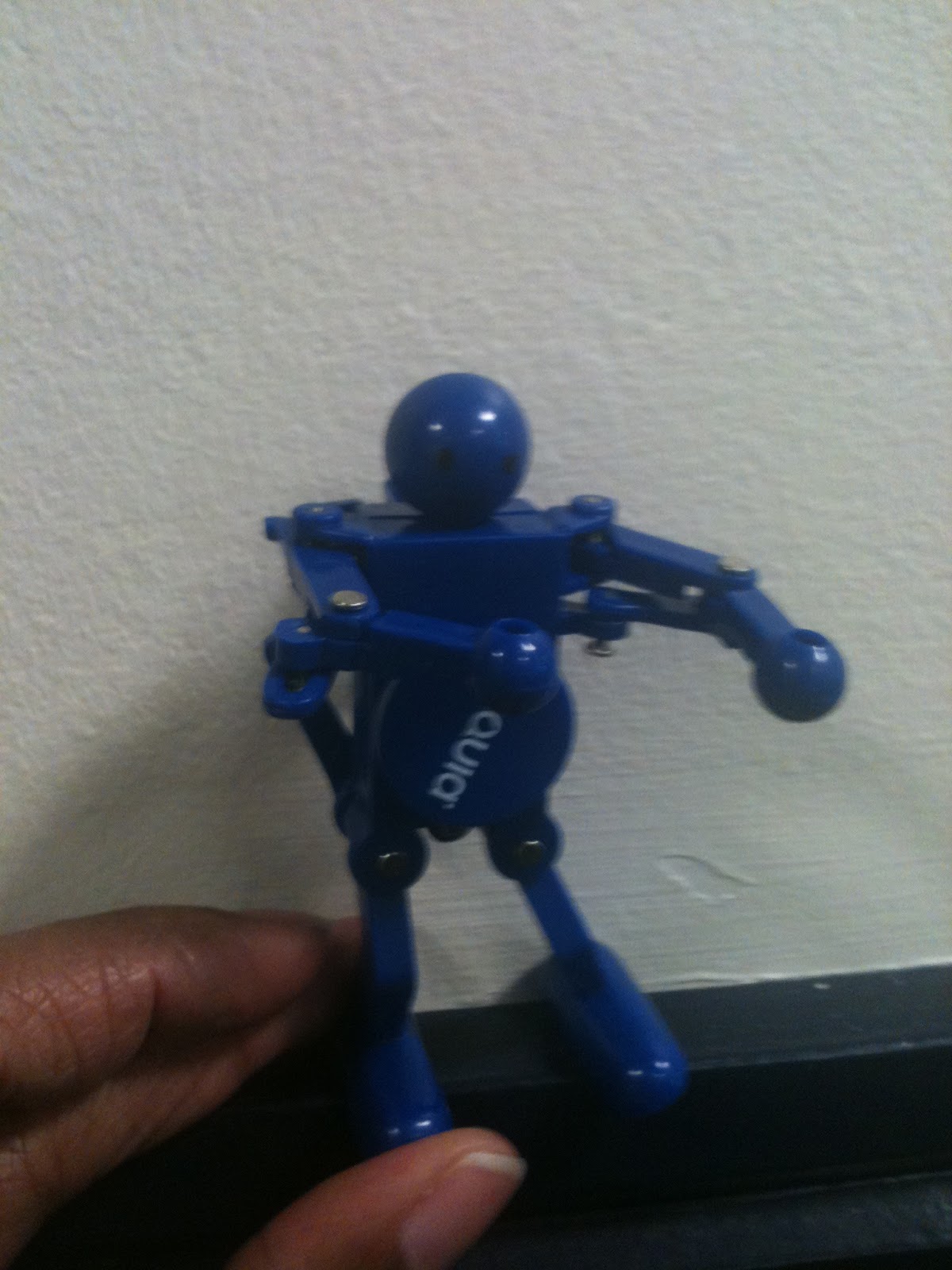
Acquia Man!
Acquia Man
You can't stop the beat!
If you think these terms sound like something involving children, think again, lol!  They are just a few of the unique terms that were flying around at the latest Capital Camp DC on July 26th & 27th.  Capital Camp DC is a Drupal (open source content management system) camp that brings together developers, designers and even IT managers seeking out employees, to talk about all things Drupal.

There were hundreds of developers, designers and IT managers who converged on the campus of George Washington University in hopes of taking home some great new Drupal techniques and most importantly, new modules to help make Drupal work better and faster for our customers.

So what about those terms you say?  Well first we have SMACSS (pronounced smack). Smack may be something that a Redskins fan and a Ravens fan talk back and forth to each other, but in the Drupal world SMACSS is Scalable Modular Architecture for Cascading Style Sheets [CSS].  Still sound too techie? In layman's terms, it's basically just a better way to apply fonts, colors, layouts and design on a website.  SMACSS is used more as a style guideline as opposed to a rigid framework.  It (SMACSS) attempts to document consistency in site development when using CSS.  I like to put it this way, if we were playing the game "Name that Tune", if you can name that tune in 10 notes, if I was applying it to SMACSS, I could name that tune in 5 notes.  So basically I'm doing the same thing, only I'm using less code to write it and I can apply the code more globally to the site, without writing more code.  Hope that makes sense.  Forgive me if it's still too techie, I am after all a geek (but I'm a "cool" geek, lol!). 

Then we were talking a lot of SASS!  No sass isn't the kind of talk you get from a know-it-all pre-teen or teenager, for those of you who have known that luxury, lol.  SASS is Syntactically Awesome StyleSheets or some like to call them, stylesheets with attitude. SASS is again, a better way to build StyleSheets using less code and basically having less repetition.  The "less is more" motto.  If I could get all of my websites built with a "less is more" concept on the outside, it would be a perfect world! Alas, it can't always be that way, but I'm trying! :)

Dribbble isn't really anything pertaining specifically to Drupal, but a few of the presenters dropped it so of course I had too find out what all the buzz was about.  Dribbble is not something you wipe off of the face of a teething toddler, lol, Dribbble is actually like a grown up "Show and Tell" website.  Dribbble is basically show and tell for designers.  Web designers, graphic designers, illustrators, icon artists, typographers, logo designers, and other creative types share small screenshots (shots) that show their work, process, and current projects. Pretty cool!  Check it out here: http://dribbble.com/

Those were just some of the more interesting things that I learned; some of the coolest things I learned were about some great modules that I can test out on some of my existing Drupal sites (WCFL Intranet, WCFL Summer Reading Club and Choose Civility.)  Modules are basically like adding "features" to your website.  Since Drupal is an open source product, thousands of modules are created and you don't always know what the latest and greatest ones are unless you go to a Drupal event.  I also learned that if I want to be an "established" Drupal developer, I should get started creating my own Drupal module.  Ehh...I don't know if that's going to happen anytime soon, but there is always hope that in one of my idle moments I could create the next great Drupal module!

I could go into greater detail about all that I learned, but so as not to bore you with more techy terms I'll just pass along some of the cooler websites that I learned about while I was there.  This was a session on site performance and trends.  Here are a few websites to check out:
  • webpagetest.org  - Runs a free website speed test from multiple locations around the globe using real browsers (IE and Chrome) and at real consumer connection speeds.
  • GooglePageSpeed - Analyzes the website and then gives suggestions for better performance
  • Yahoo YSlow - Analyzes the website and then gives suggestions for better performance
  • WhichLoadsFaster - Is a bit of friendly competition for websites to compare 2 or more website performance
  • Httparchive.org - is a website that tracks trends for how websites have been built over the years.
Overall, the 2013 Capital Camp DC was as informative as always.  Sometimes it is so much information that you can't always wrap your head around it.  I am looking forward to applying some newer modules that I found out about to my existing sites, but new modules always come with a risk.  You may break something when you apply it, so it's always best to proceed with caution and to remember to back-up your data before hand so that you can restore the site back to what it was prior to the module being applied.

Well that's a brief look into the world of Drupal.  Thanks for reading my extra long summary!

PS.  I forgot to mention Acquia Man!  Acquia Man was just one of those cool tools they always seem to pass out at these type of events.  Acquia is actually company that specializes in Drupal tools and hosting, they provide support for their products for a fee.  They package the best of Drupal and make it available without having to do much work on your own.  Many of the speakers were from Acquia, so they are one of the premier companies when it comes to Drupal.

Friday, July 12, 2013

Give a Pickle, Get a Smile


My general feelings on the training were that it was beneficial.   It was good to be reminded of the simple things we have the power to do that can make someone else’s day (the pickles).  Since taking the training, I’m more mindful of smiling on the phone, thinking of how customers are observing my actions, and trying to maintain consistency in customer service.   

Twitter for Libraries


I have twitter but I don’t actively tweet.  I’ve heard that Twitter is where the young kids are hanging out now so I thought I should learn more about it.  I watched the webcast of MLA’s SMUG groups’ presentation on: Twitter for Libraries.  (The webcast is still available at: https://sas.elluminate.com/p.jnlp?psid=2013-05-30.1010.M.3E151848D9F8FF2DA6932CEF3E69AA.vcr&sid=2012176 if you are interested.)

The rules covered in the webcast are similar to those for all social media but it’s nice to be reminded to follow them all, especially: this is a marathon, not a race.  You have to keep going until you get an audience.  For this reason, I’m not sure Twitter is something we’ll start for the Boonsboro branch as I have enough time trying to keep our Facebook updated.  I learned from the webcast the do’s & don’ts of posting, what the heck those abbreviations mean (http://socialmediatoday.com/node/512987 ), and a couple of new twitter handles to follow.

Thursday, July 11, 2013

So I went to ALA, now what?

You might have noticed a flurry of blog posts about sessions I attended while at ALA in Chicago. But sharing what I learned in those sessions isn't quite enough; I really need to think about and speculate how I might use what I learned. How will I change my ways now that I know what I know?

Example #1: Partnerships in Unlikely Places
I just had an idea, just 5 minutes ago, that I should call Best Buy's corporate headquarters and ask them if they could come to western Maryland and do a workshop on Technology Users Advisory. We always get asked, "which tablet/device/ereader should I buy?" How well are we answering those questions? So, why not learn from the experts. They could also recommend which technologies we should pay attention to. 

Consequently, I have to call back - they weren't open yet.

I had a similar idea that involves Apple. They have some of the best customer service practices I've ever experienced so, why not ask them if they could do a 'think differently about customer service' workshop for us? Assuming my budget can accommodate their fees. If my budget cannot accommodate their fees, maybe this would be a good workshop to have sponsored by several MD library systems, or the other two regionals, or DLDS.

I have to call back - they weren't open yet either; they're on Pacific Time.

I have another example that involves a special project I'm working on with a fellow Leadership Washington County alum, who isn't a librarian nor does he work in libraries. He's an analytical MBA type who has the ability to transform data sets into interesting and engaging visuals for the marketing arm of a bio-tech company. We're both very excited about this project because we, well, I should only speak for myself here, I have very big imaginings that this will do great things for the Washington County community once it's up and running. We are still in the planning phase, talking with key stakeholders and the like so, I won't disclose more until it gets closer to the actual pilot launch. #teaser

Example #2: Experimentation and Innovation in Libraries
This program was all about what libraries can learn from lean startups.

The first thing I took to heart was the extremely simplistic notion of talking to people. Talking to lots of people. Case in point, every year I send out a training needs assessment survey to all of the staff in the three western MD counties in an attempt to find out what they need me to do for them in the coming year in regards to learning and development. After the results are in I try to schedule follow up meetings with the three staff development coordinators in the three counties. This year was no different. However, as a result of this ALA session, I've also started meeting with department heads and branch managers to have similar conversations and so far these meetings have proven to be extremely helpful and have provided much guidance. I still need to schedule these meetings in Garrett and Allegany counties.

One of the immediate benefits of having these conversations is that we identify training need overlap. For example, I was talking with Elizabeth Hulett, the head of adult services in WCFL, and she said that she had tasked one of her librarians to learn there is all to know about the Obama Care initiative that will be taking effect in a few months. Then, when I spoke with WCFL's branch coordinator, Jan Viands, I asked Jan if her staff would need to know about Obama Care, too and of course, they would. So, Shannon (WCFL librarian) and I have somewhat joined forces in identifying sources of staff training that can happen over the next couple of months - with one definite training date being on Oct. 7th for Jan's branch staff meeting. In my research on this topic, I found the Health Howard service, which, if they're prepared to do Obama Care workshops, would be available to Allegany and Garrett counties' staff as well!

The second thing I took to heart was the notion of challenging assumptions. 

Step 1: Identify the assumption
Step 2: Challenge it by turning it into a testable hypothesis

This process seems to translate naturally into my staff development life. 

Step 1: Identify the assumed training need: "Staff member X needs to learn how to download eBooks onto the iPad." Oh yeah? How do you know? LOL 
Step 2: Turn the training need into a testable hypothesis: "I predict that Staff Member X is unsuccessful at downloading an OverDrive eBook onto an iPad."

I obviously need training myself on how to write better hypotheses. 

Then, once I have my testable hypothesis, I run a small, tight experiment. In this case, I would go to Staff Member X and ask them to show me how to download an OverDrive eBook onto an iPad. Ideally, I would have some kind of rubric to keep track of which steps in the process were adequately achieved and which ones were not.

I am actually going to try attempt to test this hypothesis with some eReader training that WCFL has asked my help with today (July 11th) and on the 17th. I'll write a follow-up post to review what happens.

So, for those of you who went to ALA, what will you do differently now that you know what you know?


Monday, July 8, 2013

Improv Fundamentals

Presented by Second City in Chicago at the American Library Association's annual conference.

The biggest take always I got from this program were more exercises to do with groups to illustrate communication and creativity processes, and also ways to use exercises when just interacting one on one with folks. 

Before I go into the different exercises we did, I want to share some really important verbiage they shared that really resonated with me. 

1. When working/talking with a colleagues whose expertise is identifying weaknesses and problem areas and/or they are great at identifying the reasons why an idea might not succeed, instead of becoming frustrated with them, thank them for their gift of insight and acknowledge that you want to hear those insights (because you do. Fault-finding is important!) and that you want to make sure they're heard at the most opportune time so that you can easily capitalize on them.  Tell them that now isn't the best time but that we will need other those insights in the afternoon or tomorrow or whenever the best time might be.

2. To keep these aforementioned talented folks engaged - especially when doing group work like brainstorming - ask them to facilitate the exercise or be the scribe. So, instead of them not participating at all because they're more focused on the dark spots, tell them that you need them to facilitate the group's current exercise. This is great for two reasons: they're doing an important and valuable task and the group is getting the results they need at the time. 

3. Get into the habit of saying, "yes, and..." To build upon ideas rather than shutting them down. For example, let's say I suggest doing one on one technology appointments with me and library staff to help staff learn a bit more about whichever technologies interest them or those with which they are having the most difficulty. Then let's say you think it's a dumb idea and that it'll never work because we tried it before...staff won't sign up...it's a waste of time...whatever the reason, but with the "Yes and" technique, you squash those less constructive sentiments and say, "yes, and we could have it at the Oakland library!" Or, "yes, and we could include databases in those one on ones!" or, "yes, and we could make them worth one CEU for folks who need CEUs!"

And from there we work together to develop the idea and together with a more fun and positive attitude we might come to the conclusion that, 1) this is going to be great! Or 2) this needs more work but has potential, or 3) this is not actually the best way to fulfill the learning need. So, sure, it might take longer to get the the, "this is a crappy idea" but it allows the idea generator to reach that conclusion on her own which is more powerful anyway, and it also provides equal opportunity to get to the, "wow, this is a great idea!"  Win win for both parties.  

The Exercises


"Red ball, thank you."
This is a whole group exercise that brings awareness to the communication pitfalls we all cause and are victims of each and every day. 
Have the group stand in a circle. The lead facilitator holds up an imaginary ball in one hand and says, "In my hand I have a red ball and it will forever be red and it will always stay this shape and size. Before I throw my red ball to someone I have to make eye contact and say Red Ball. The recipient has to acknowledge the red ball by saying in response, Red Ball, thank you. Then that person makes eye contact with someone and repeats the process."
This goes on for a few minutes until the group gets the hang of it. Then the facilitator pauses the group and asks to see the red ball. Then he/she introduces a green ball in the exact same way they introduced the red ball and the game begins again but with two imaginary balls going throughout the circle. The facilitator keeps adding more and more imaginary items (yellow ball; polka dotted blue ball, etc) until it's pretty clear that the group has dropped some balls. At that point, the facilitator pauses the group and asks to see all of the imaginary objects. Chances are all items won't be accounted for. Then the facilitator debriefs the exercise and calls attention to what went wrong. Then we start all over again but then we add even crazier objects like a rabid squirrel, a crying baby, a freshly baked pie, a card catalog from 1972... You get the idea. Ideally, the 3rd round should end with all objects accounted for because participants (especially those in the sender role) will be more diligent about getting confirmation from the person who's on the receiving end of the item before they actually toss/pass the item to them. 

"Thank you"
This is a pair (1:1) exercise where each participant takes turns having a typical conversation about any topic they wish but before each turn the participants must say, "Thank you," before saying their next sentence. For example:

Julie: Hey, how was the ALA conference?
Carrie: Thank you. It was great. I attended a lot of really great sessions. How about you?
Julie: Thank you. I went to several really great sessions. I think the TLC program was the best though.
Carrie: Thank you. I wanted to go to that one but I had a different one that I really had to attend instead. 
Julie: Thank you. So, which one did you attend instead?

You get the idea. The notion is to slow down your conversation and always start on a positive and encouraging note because both of those components help to stimulate dialog. 

"Beginning with the end"
This is a pair (1:1) exercise where each participant takes turns having a typical conversation about any topic they wish but each participant has to start his/her first sentence with which ever word was their partner's last word. For example:

Julie: Hey, how was your fourth of July?
Carrie: July fourth was crazy hectic cause I'm trying to pack and move and start a new job but all in all I had a great time with friends and family.
Julie: Family get-togethers are always memorable times. 
Carrie: Times when we can eat good food and drink good drink and play a fun game or two! 
Julie: Two of my cousins even showed up yesterday to celebrate the holiday!

You get the idea. The notion here is all about communication as a team/partner effort. You want to set your partner up (and vice versa) to succeed by giving them a gift in the form of an easy-to-use last word. So you really have to think before you speak.

"Director"
This is an exercise for a group of three with one person acting as the "Director" and the other two having a conversation about any topic they like. At anytime he or she wishes, the Director claps and whomever is speaking needs to revise what they just said. For example:

Julie: Hey Carrie, I'm really happy to hear about your new job.
Director: CLAP
Julie: Hey, Carrie, I'm really happy to hear about your new cat.
Carrie: Thanks. He's a handful but a lot of fun. We named him Max.
Director: CLAP
Carrie: We named him Polaris.
Director: CLAP
Carrie: We named him Wizard.
Julie: What a great name! What color is he?
Carrie: He's various shades of gray - ha ha how fitting for a librarian!
Director: CLAP
Carrie: How fitting for a fisky cat!
Director:CLAP

You get the idea. The idea behind this exercise is to practice thinking quickly on your feet and responding appropriately to changing demands. Think you know what that patron's excuse is going to be as they approach the circ desk with 15 kids books dripping in orange goo? Think again. Or better yet, don't think at all and just listen to them attentively without projecting your assumptions on to them.

The final project

So, our final project for the preconference was to get into groups of 7 and in 10 minutes we had to:

  • Think of a new invention and the problem it solves
  • Give it a name
  • Give it a catchphrase / tagline
  • Give it a theme song
  • Give it a celebrity endorser
  • Design a 30 second commercial that the group would perform for everyone on stage
This seems like an exercise that could be done at any staff meeting or during a staff development event to get staff thinking about new services, programs, or products their libraries could offer. What do you think about all this? How might you or your library take advantage of all the the world of improv has to offer us? I know I will be looking into additional improv resources and potential improv workshops that can be provided to staff in the western counties.